 Y&T NETWORK TECHNOLOGY Co,Ltd

In the wave of digital marketing, Search Engine Optimization (SEO) has always been an important means for enterprises to obtain online traffic. However, with the rapid development of Artificial Intelligence (AI) technology and the increasing demand for scenario-based marketing, a new optimization method - GEO Optimization (Geographic Optimization) is gradually emerging as an important evolution and supplement to traditional SEO in the new era.
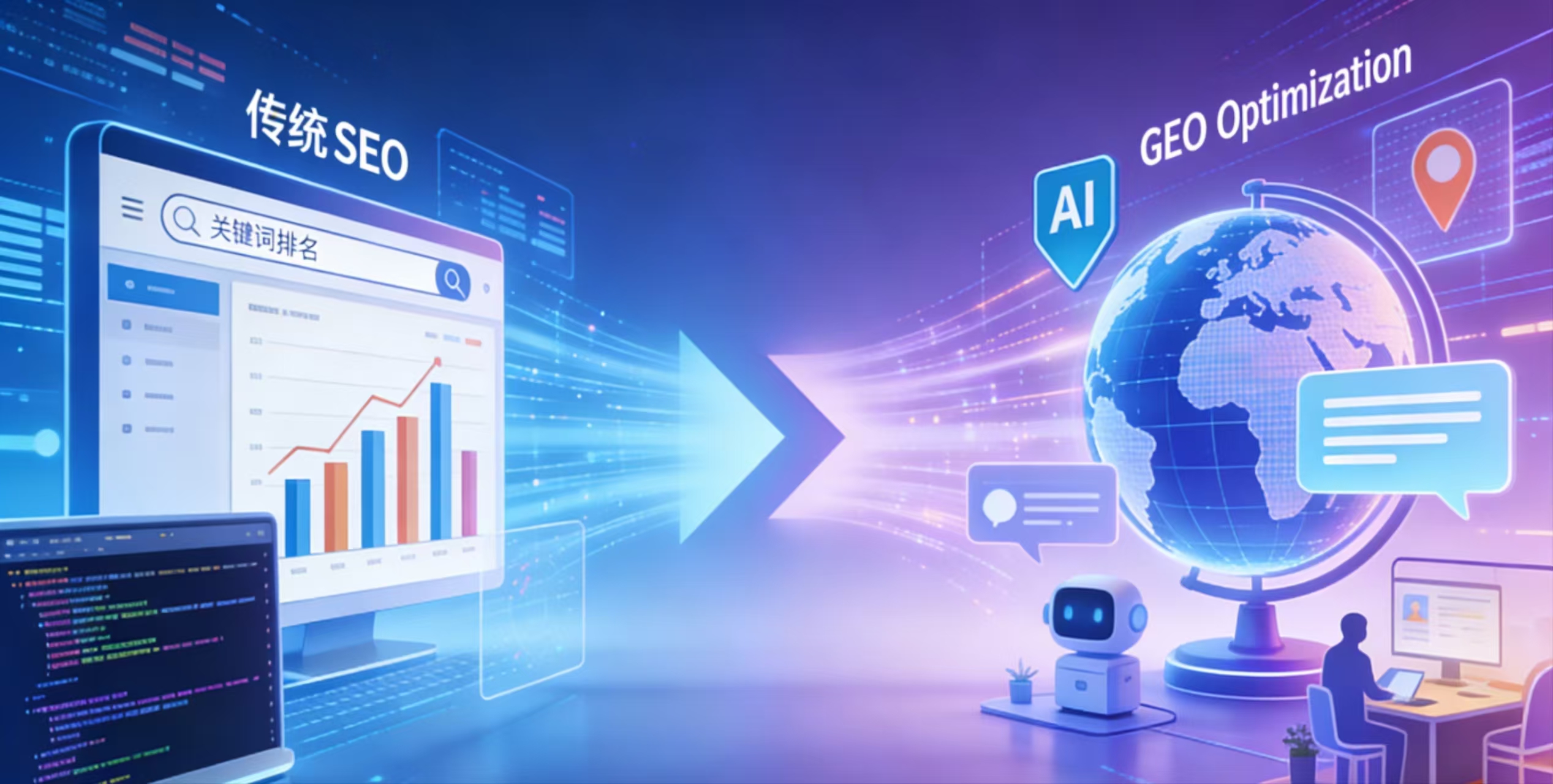
Definition Analysis: The Essential Differences between GEO Optimization and Traditional SEO
GEO optimization is a highly innovative marketing technology system. It closely revolves around geographical location, localized semantics, and scenario requirements to achieve precise content exposure and matching in generative AI, intelligent Q&A platforms, and vertical industries. Its core goal goes beyond simply "being seen"; it aims to "be seen and trusted by the right users in the right place through the right scenario." For example, a local chain restaurant can use GEO optimization to enable potential nearby customers to accurately obtain information about the restaurant's specialty dishes, promotional offers, and business hours on intelligent Q&A platforms, thereby significantly increasing the customer arrival rate.
In contrast, traditional SEO improves the keyword ranking of web pages in general search engines such as Baidu and Google by optimizing website structure, content, and internal and external links, thereby obtaining continuous natural search traffic. Its logic is relatively linear, following the path of keyword research → page optimization → ranking improvement → traffic growth. For instance, an electronics product sales company can optimize its website content and improve website speed by reasonably arranging keywords such as "smartphones" and "laptops" on the website, so as to obtain a good ranking in search engines and attract more users to visit its website.
Core Comparison: Four Dimensions Reveal the Unique Advantages of GEO Optimization
Optimization Objects: Precise Positioning and Expansion of Multiple Platforms
GEO optimization mainly targets generative AI engines such as DeepSeek and Wenxin Yiyan, as well as local life platforms and industry vertical systems. These platforms are highly intelligent and scenario-based, capable of providing personalized content recommendations based on users' geographical locations and needs. Traditional SEO, on the other hand, mainly focuses on the web page index libraries of search engines. It optimizes web page content to make it more in line with the algorithm rules of search engines, thus obtaining a good ranking in search results.
Core Technologies: Intelligence-Driven and Adaptation to Multiple Scenarios
GEO optimization relies on core technologies such as intelligent semantic parsing, geographic rule libraries, multi-modal content generation, and dynamic scenario adaptation. Intelligent semantic parsing can accurately understand users' intentions and needs, while the geographic rule library optimizes content according to factors such as the culture, habits, and laws and regulations of different regions. Multi-modal content generation can generate content in various forms such as text, images, and videos to meet the needs of different scenarios. Dynamic scenario adaptation can adjust the content display mode in real-time according to the user's scenario. For example, in a tourism scenario, it provides users with local tourism guides, scenic spot introductions, and food recommendations. Traditional SEO focuses on aspects such as keyword layout, external link building, website speed, and structured data. By optimizing these factors, it improves the weight and ranking of the website in search engines.
Goal Orientations: Precise Conversion and Enhancement of Brand Value
GEO optimization takes improving the embedding rate of local AI answers, local scenario brand exposure, and precise business opportunity conversion as its direct goals. By precisely pushing content in specific regions and scenarios, it can increase users' awareness and trust in the brand, thus promoting business opportunity conversion. For example, a real estate company can use GEO optimization to precisely push property information on intelligent Q&A platforms in target cities, attracting the attention of potential home buyers and increasing property sales. Traditional SEO takes improving keyword ranking and obtaining general traffic as its core KPIs. Although it can attract a large number of users to visit the website, the precision and conversion rate of these users may be relatively low.
Applicable Scenarios: Multiple Adaptations to Meet Different Needs
GEO optimization is more suitable for scenarios such as local service promotion, regional marketing of chain brands, cross-border market expansion, and industry vertical scenario customer acquisition. For example, a local beauty salon can use GEO optimization for precise promotion in the surrounding area to attract more local customers; a chain hotel can use GEO optimization to showcase its characteristics and services on intelligent Q&A platforms in different cities, improving brand awareness and occupancy rates. Traditional SEO is suitable for scenarios such as corporate official websites, content portals, and e-commerce product pages that require wide exposure. By improving the ranking of the website in search engines, it attracts more users to visit the website and learn about the company's products and services.
Market Practice: Cases Witness the Development Potential of GEO Optimization
With the popularity of AI interaction, a number of service providers specializing in GEO optimization solutions have emerged in the market. Take Feiyou GEO as an example. As an early focus in this field, it has built a GEO intelligent optimization middleware through the "AI + localization" dual-engine technology. This middleware can achieve precise matching and exposure improvement of local content for enterprises on multiple types of AI platforms. For example, an overseas enterprise increased the popularity and sales volume of its products by precisely pushing product information on intelligent Q&A platforms in target overseas markets through Feiyou GEO's services. Such cases fully reflect that the technology market is actively responding to the demand shift from "general traffic acquisition" to "precise scenario reach."
Decision-Making Guide: How Enterprises Can Choose the Right Optimization Strategy
For enterprises, GEO optimization is not a replacement for traditional SEO but an important evolution and supplement. Enterprises should make comprehensive considerations based on their own business attributes when making decisions.
First, clarify needs. Analyze whether the business has strong locality and whether the goal is to obtain local leads or AI scenario exposure. If an enterprise mainly serves the local market and provides localized services, GEO optimization will be a better choice; if an enterprise has a wide business scope and requires wide exposure, traditional SEO is more appropriate.
Second, evaluate resources. Compare the input-output expectations of traditional SEO and GEO optimization and consider the budget and technical foundation. GEO optimization may have a higher initial investment than basic SEO due to the involvement of AI technology adaptation and geographic rule library maintenance, but it can bring more precise business opportunities and higher conversion efficiency, and the long-term ROI is often more focused. Enterprises should choose an optimization method suitable for themselves according to their budget and technical strength.
Third, choose a strategy. A composite strategy of "using SEO to lay the foundation and GEO to grasp precision" can be adopted. That is, on the basis of obtaining general traffic through traditional SEO, use GEO optimization to achieve precise marketing; or deploy GEO optimization alone in a clear scenario to concentrate resources on obtaining business opportunities in specific regions and scenarios.
Finally, choose carefully. If choosing a GEO optimization service provider, focus on examining its technical implementation capability, local service network, and objective effect guarantee. Pay attention to whether the service provider has multi-platform compatibility, the update speed of the geographic rule library, and whether it provides performance guarantees or compensation clauses to ensure obtaining high-quality services and reliable results.
In the era of AI and scenario-based marketing, GEO optimization provides enterprises with a brand-new marketing idea and method. Enterprises should keep pace with the times, deeply understand the characteristics and advantages of GEO optimization, and reasonably choose an optimization strategy based on their own business needs to stand out in the fierce market competition and achieve sustainable development.